Buying Guides
Why Do Shade Net Quotes Differ at the Same Shade Percentage?
Learn why shade net quotes differ at the same shade percentage. Compare GSM, roll dimensions, materials, packing and delivery terms before ordering.
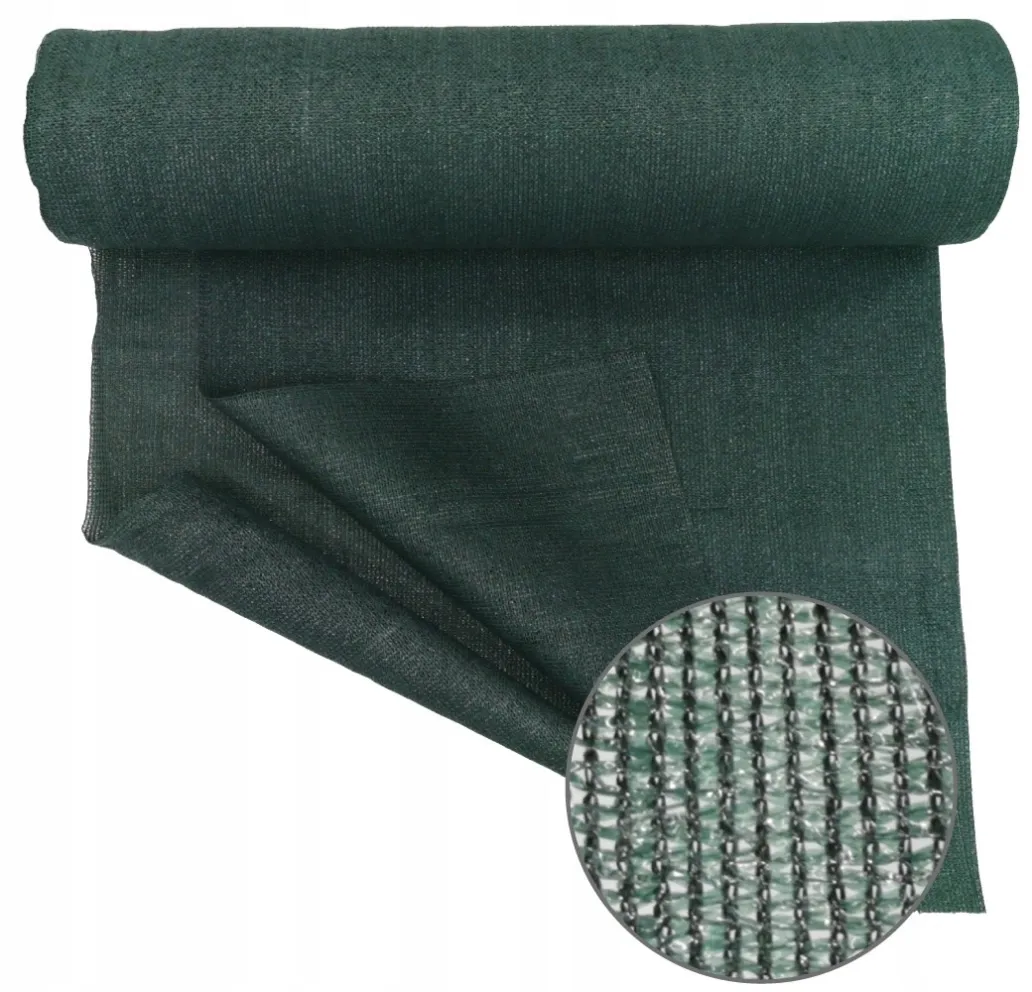
Two shade nets carrying the same shade percentage can have different prices because the label does not define the complete product or supply terms. Before comparing offers, align GSM, construction, dimensions, material requirements, finishing, packing and the delivery basis. Then assess the remaining price difference.
This is a recurring issue in Kunjie Net’s quotation discussions. A buyer may request a shade percentage without specifying fabric weight. Suppliers then propose different products, while the buyer compares the headline prices as though the specifications were identical.
This guide shows importers, wholesalers and farm buyers how to identify those differences, decide when a quotation needs clarification, and request comparable offers.
1. Why Does Comparing the Complete Shade Net Specification Matter?
A quotation is useful only when you know what quantity and specification the price buys. A low price per roll can describe a narrower roll, lighter fabric or fewer metres. A low price per kilogram still leaves dimensions, finishing and the weight basis to confirm.
The requirement also changes with the buyer. An agricultural shade net distributor needs clearly defined SKUs for repeat orders. A farm owner needs a specification suitable for the installation and intended use. A garden or patio shade cloth wholesaler may also need individual packing, labels and finished fixing details.
Compare against that requirement before deciding whether the lowest offer meets it. An incomplete quotation needs clarification, not an immediate judgment about the supplier’s quality.
2. Which Specifications Should Match Before You Compare Shade Net Prices?
Shade Rating, GSM and Knitting Construction
Specify the target shade percentage and GSM separately. The same nominal shade label does not establish one fixed fabric weight. Also ask whether the rating is nominal or supported by a stated measurement method.
In our purchasing discussions, we have encountered an offer described as nominally 80% shade at 65 GSM. The important lesson is not that 80% shade should weigh 65 GSM. That combination was part of a quotation discussion, not a verified optical test or a universal specification.
Ask every supplier to declare the GSM and yarn construction beside the shade rating. Tape-knitted, monofilament and combined constructions should not be silently substituted for one another.
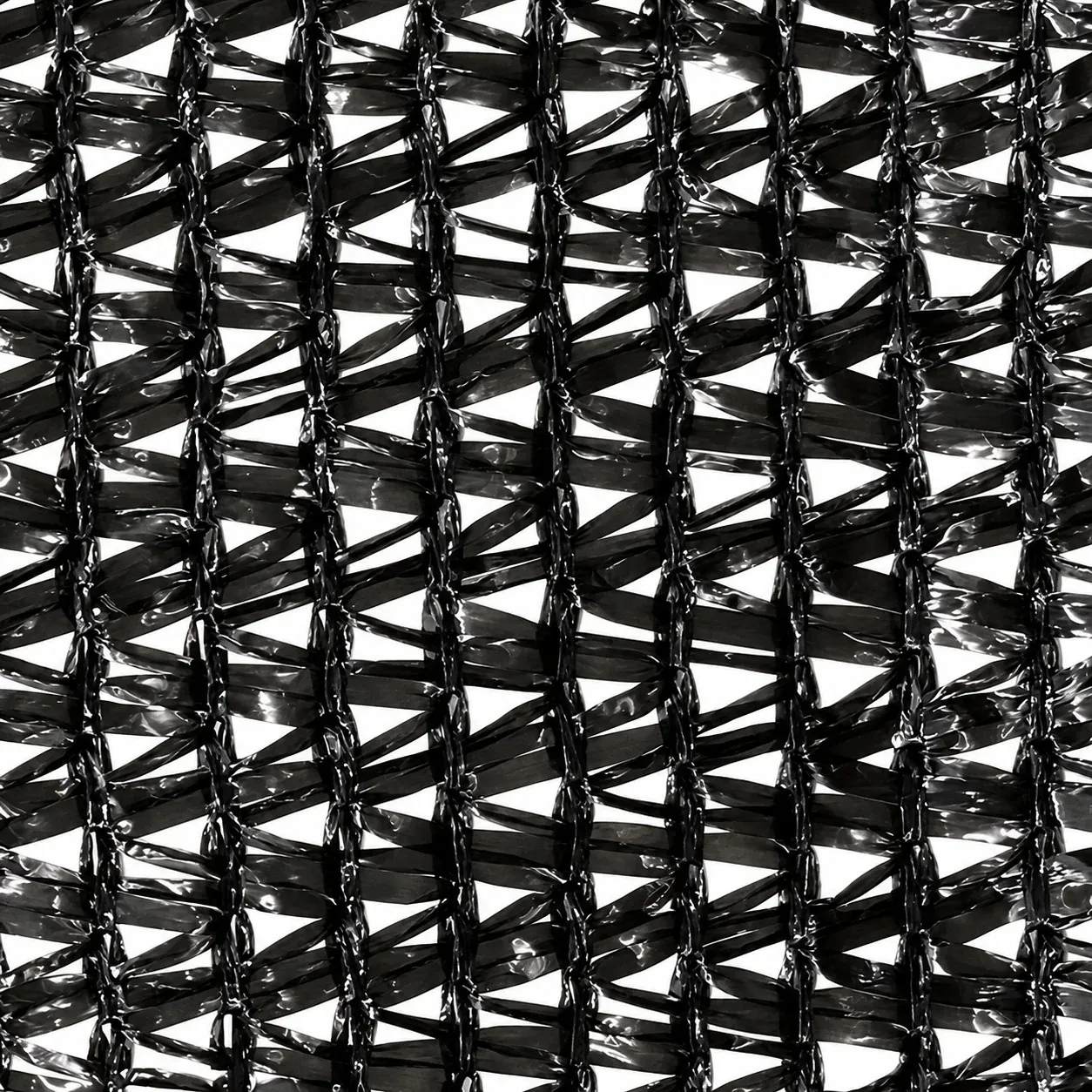
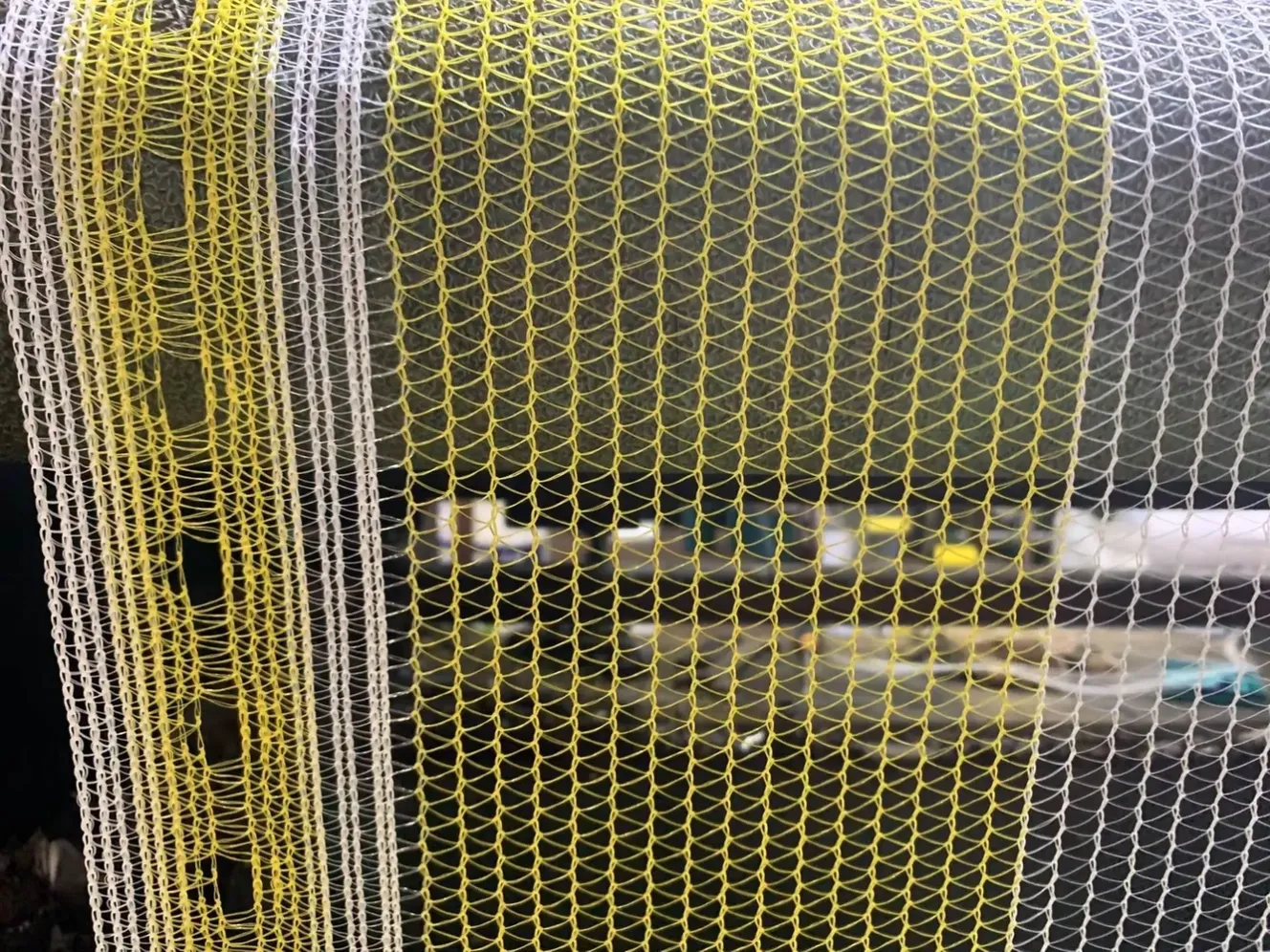
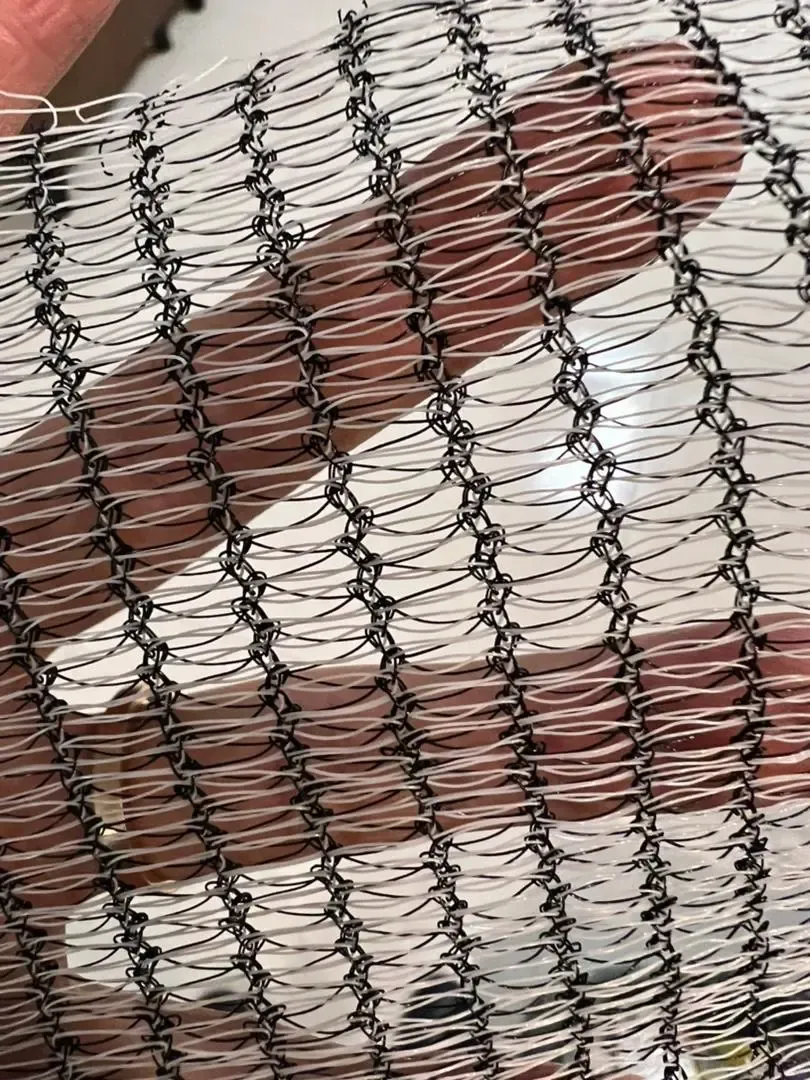
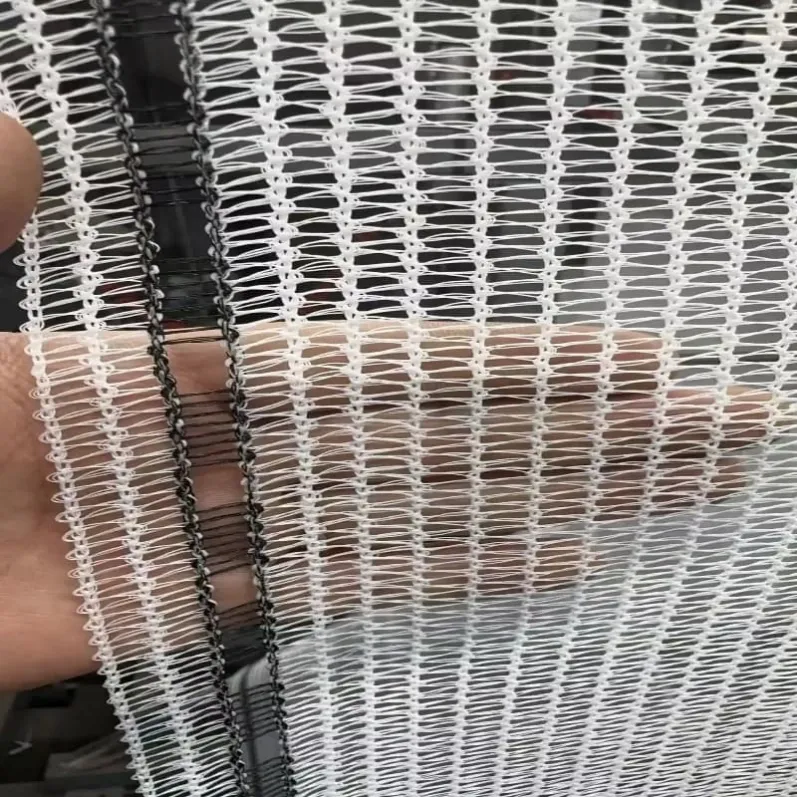
Tape-knit detail supplied by Kunjie Net. Appearance helps identify construction; it does not verify shade percentage, GSM or service life.
Unfolded Dimensions and the Weight Basis
Compare unfolded width and finished length, not folded packing width. Define whether the stated weight includes the core, wrapping, labels, binding or eyelets. For a fabric-only calculation:
Average GSM = fabric mass in kg × 1,000 ÷ measured area in m².
One roll record supplied by Kunjie Net illustrates the problem. Its target was 50 GSM, nominal dimensions were 2 × 50 m, reported measured dimensions were 2 × 53 m, net weight was 5 kg and gross weight was 5.5 kg. Assuming the net weight excludes the core and packaging, the nominal-area calculation gives 50 GSM, while the measured-area calculation gives 47.17 GSM.
That single record does not establish a pass or fail: measurement conditions and an acceptance tolerance were not supplied. For price comparison, record extra length and average GSM separately rather than allowing one figure to hide the other.
Material and UV Requirements
Ask what material formulation applies to the quoted product and what supporting records are available. Where a resin producer or grade is specified, confirm it in the order and match the supplied records to the relevant production batch.
“HDPE,” “virgin material” and “UV stabilized” describe different aspects of the product. None alone establishes a fixed outdoor service life. Compare any durability commitment together with its applicable evidence, exposure conditions and warranty terms.
Do not infer recycled content or an inadequate UV formulation from price alone. If a requirement matters to the purchase, obtain a clear declaration and agree how it will be checked.
Finishing, Packing, Quantity and Delivery Terms
Check whether the price covers plain fabric, reinforced edges, eyelets or another finished configuration. Then align roll length, labels, individual wrapping, outer packing and order quantity.
Commercial terms must also match. An EXW quotation and an FOB quotation include different responsibilities and costs. For FOB offers, specify the same named port. For delivered offers, clarify destination charges and any included taxes or duties before comparing totals.
If the price is per running metre, account for width when converting it to a square-metre basis. For fabric-only pricing, a theoretical conversion is:
Price per m² = price per kg × GSM ÷ 1,000.
This conversion is valid only when the kilogram price and GSM refer to the same fabric mass basis. Finished-net charges and commercial terms still need to be compared separately.
3. How Can Buyers Decide Whether a Lower Quote Is Comparable?
Use a comparison sheet before asking suppliers to match a price.
What the quotations show | Can you compare the prices directly? | What to do next |
|---|---|---|
Same shade label, but GSM is missing | Not yet | Request declared GSM, construction and the shade-rating basis |
Same GSM, but different roll dimensions or unclear weight definitions | Not yet | Align usable area and the treatment of core, packing and accessories |
Same fabric, but different finishing or packing | Not yet | Request prices for the same finished configuration and packing |
Matching product details, but different quantities or delivery terms | Not yet | Obtain offers for the same quantity and named delivery basis |
Matching product and commercial requirements, with a price difference remaining | Yes, subject to verification | Compare the price alongside delivery commitments, supporting records and supplier performance |
Even aligned specifications do not make every supplier’s price identical. Production efficiency, purchasing costs, capacity allocation and commercial margins can differ. The purpose of this process is to identify a genuine choice between comparable offers.
Kunjie Net’s confirmed tape shade net range covers 35–95% shade, 30–320 GSM and widths up to 8 m. Colours include black, white, green, dark green, red and sand. These are supply ranges, not a promise that every shade, weight, colour and width combination is available.
For a quotation, start with the intended use and required specification. We can discuss candidate options and sample confirmation before the final configuration is agreed. View our shade net product information.
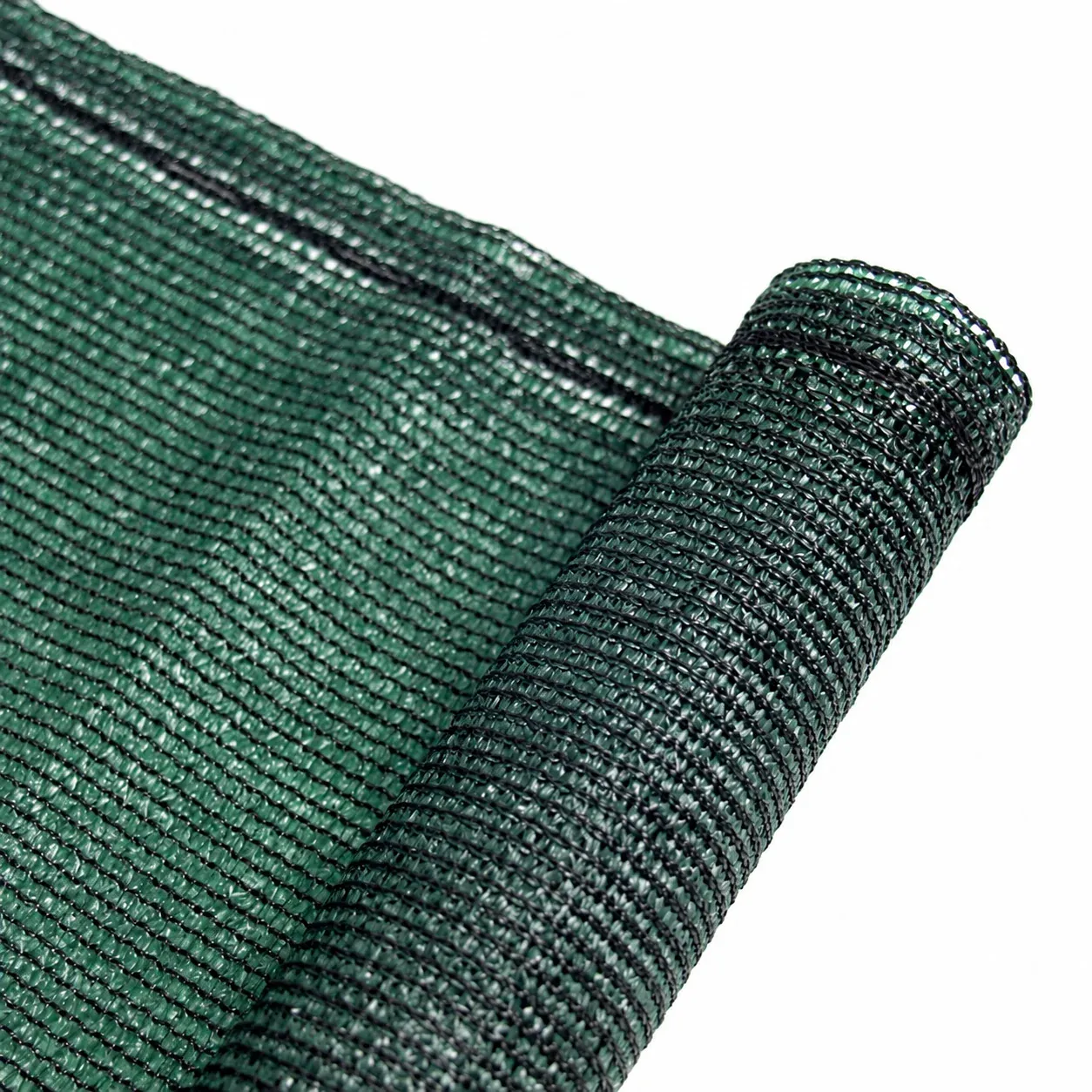
Product image supplied by Kunjie Net. Confirm the quoted construction and finished configuration against the selected sample.
4. What Information Should You Send Before Requesting a Revised Quote?
Give every supplier the same version of the requirement sheet. Identify alternatives separately so a lighter or differently finished option is not mistaken for an equivalent offer.
Requirement | Details to send or request |
|---|---|
Application | Agriculture, nursery, livestock area, garden or patio; destination and installation conditions |
Shade requirement | Target percentage, nominal or tested basis, and required verification |
Fabric | GSM, construction, colour and material requirements |
Dimensions | Unfolded width, finished length, quantity by size and measurement conditions |
Weight | Defined fabric or finished-product basis; declared core and packing treatment |
Finishing | Plain edges, reinforcement, eyelets and their agreed layout |
Packing | Individual and outer packing, labels and any required package measurements |
Acceptance | Agreed tolerances, approved sample reference and inspection requirements |
Commercial terms | Quantity, currency, price unit, named delivery point or port, and shipment timing |
A concise request can read:
Please confirm the GSM, construction, unfolded width, roll length and net-weight basis for your quoted shade rating. Identify any differences in material, UV requirements, finishing, packing, quantity or delivery terms, and price alternative specifications separately.
Frequently Asked Questions About Shade Net Quotations
Can I Obtain an Initial Price If I Only Know the Shade Percentage?
Yes. Share the application, dimensions and quantity so the supplier can propose candidate specifications. Treat that offer as an initial option until GSM, construction and the remaining requirements are confirmed. Do not assume it is equivalent to another supplier’s offer solely because the shade labels match.
Should I Compare Prices per Kilogram or per Square Metre?
Use the unit appropriate to the purchase, but define the mass and area basis. Kilogram pricing needs a clear weight definition; square-metre pricing needs confirmed dimensions and GSM. Finished pieces also require matching finishing. Converting the units does not remove specification differences.
Can I Send Another Supplier’s Quotation for Comparison?
You can share a specification summary with the supplier’s identity, contact information and confidential commercial details removed. Include the technical requirements, quantity, price unit and delivery basis you are permitted to disclose. The first task is to identify differences, then request a revised offer for the agreed specification.
Before accepting a shade net quotation, confirm what the price includes and how the delivery will be checked. If the specifications do not match, request clarification or a separate alternative price. If they do match, assess the commercial offer on that common basis.
For the full picture on comparing shade net prices like-for-like, read Does a Lower Shade Net Price Mean Cutting Corners?