Oct 24, 2026Buying Guides
How to Choose Shade Cloth for Crops, Poultry Houses and Patios
Pick the right shade percentage by crop, poultry house or patio, match fabric to your lifespan, and send an inquiry that gets an accurate quote first time.
By Eric Zhang, Sales Manager - BINZHOU KUNJIE NET CO., LTD, HDPE shade netting factory since 2010.
Most shade cloth problems start before the net is woven: someone ordered a percentage that did not match the crop. Tomatoes stall under 70%, poultry houses overheat under a badly chosen 90%, and patios come out darker than the customer wanted. This guide fixes that in three steps. By the end, you can pick a shade percentage by application, match the fabric build to your budget and lifespan, and send a supplier an inquiry that gets an accurate quote the first time.
Why the right shade percentage matters
Shade percentage is the share of total sunlight a fabric blocks, and it decides yield, animal stress and product returns more than any other number on the label. It is also the most misused one, because three different numbers get printed as if they were the same: shade percentage (visible sunlight blocked), UV block (ultraviolet only - the number American shade sails are sold by) and GSM (fabric weight, a construction figure). Keep one rule in mind: the percentage is the result of yarn, weave and color - not a property you can order on its own. That is why the same 70% exists at 90 GSM and at 200 GSM, at three different prices.

What shade percentage means: the share of total sunlight the fabric blocks.
Key factors to compare
Size, material and UV build
Three build choices decide performance and price:
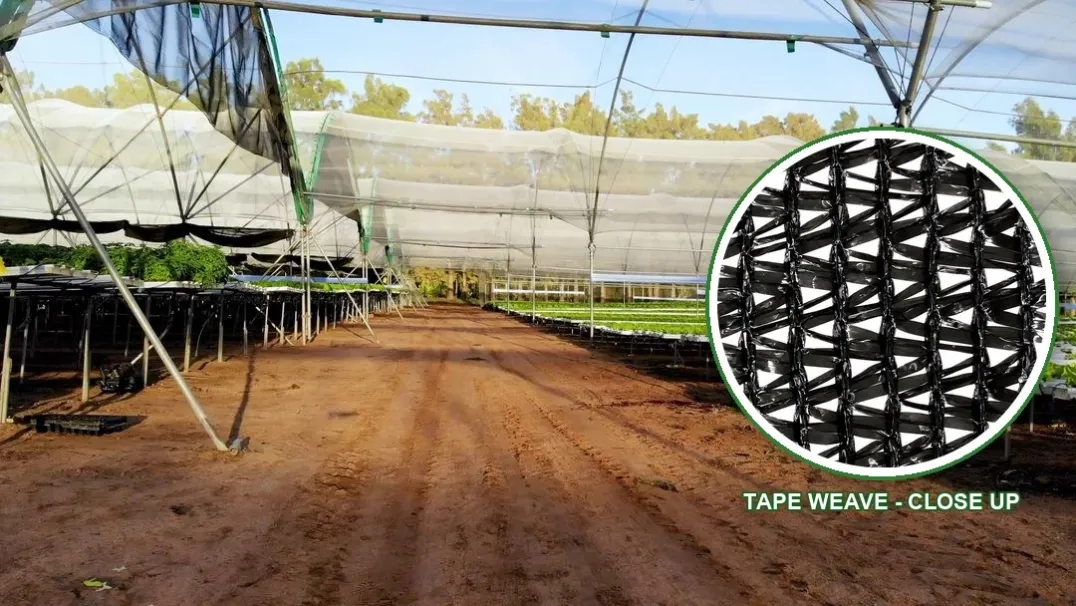
- Yarn: flat tape reaches 70% shade at 85-110 GSM and lasts about three seasons. Monofilament needs 190-240 GSM for the same 70%, resists wind and runs 7-10 years at 2.5-3% UV loading. Tape for short budgets, mono for permanent structures.

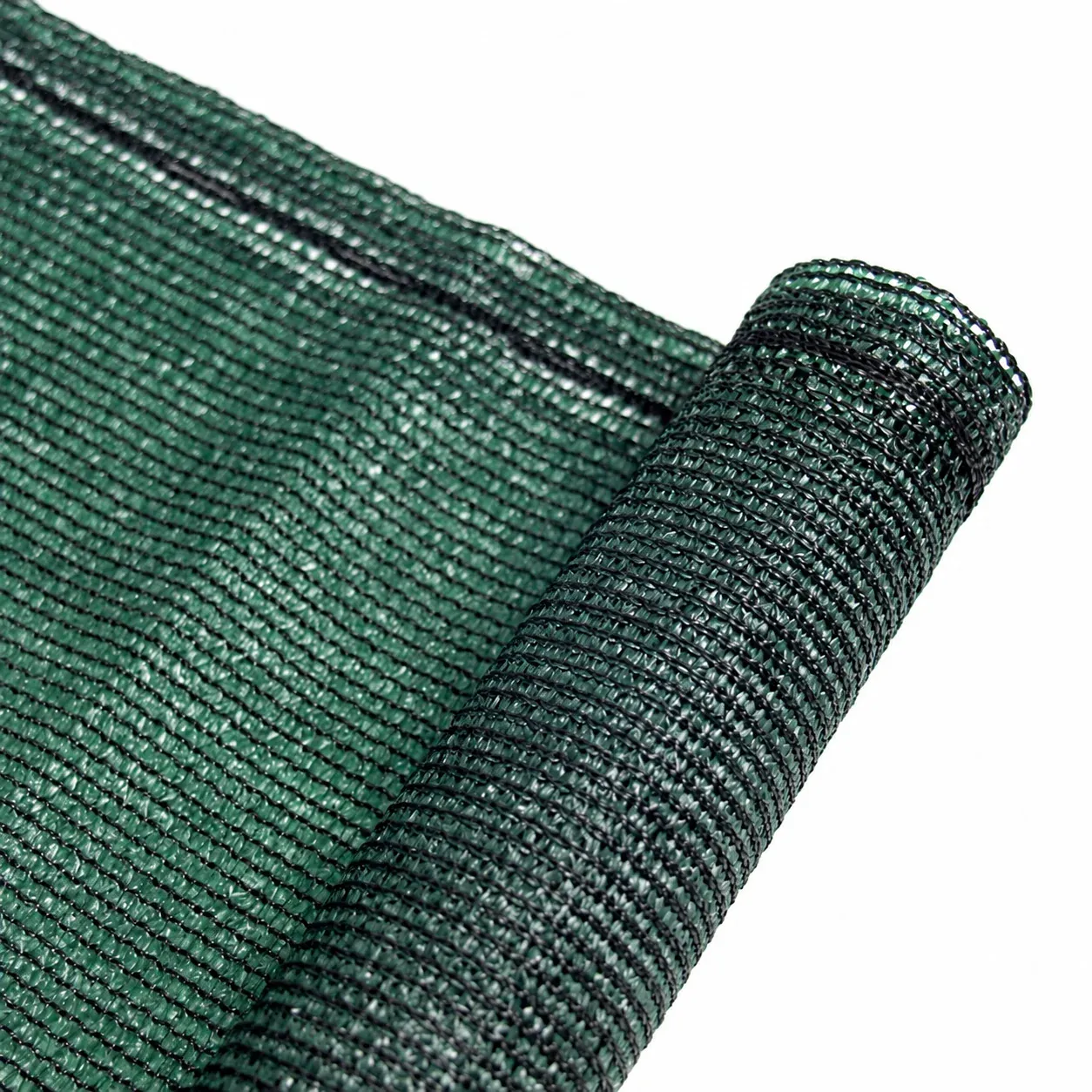
Tape weave close-up (black, 70% class).
- Width: standard rolls run 1-6 m wide; wide lines reach 8 m, which means fewer joints on greenhouses and less fixing waste.
- UV loading: about 1% HALS lasts 2-3 seasons, 2% around 5 years, 2.5-3% for 8-10 years. Weight without UV content is a half specification.

Build options: Mono+Mono, Tape+Tape, Tape+Mono - weights, colors and packaging.
Application scenario
Use the table, then correct for geography: above 40 degrees latitude drop one step, desert climates add one.
Application | Shade % | Note |
|---|---|---|
Tomatoes, cucumbers, peppers | 30-50% | Utah State trials: correct-range shading lifted marketable tomato yield 50% |
Nursery and seedlings | 50% | Uniform diffusion matters more than maximum block |
Poultry houses | 70-80% | Ventilation first: open sides plus 75% beats sealed plus 90% every summer |
Cattle sheds, parking | 90% | Shaded area per animal matters more than darkness |
Patio, pergola, balcony | 90% | Sold as 88-98% UV block; sand and light grey are the volume colors |

Typical applications: greenhouse, poultry house and patio shade sail.
Common mistakes
Three mistakes cost buyers the most. Comparing UV block against shade percentage as if they were one scale - they measure different things. Assuming hotter climate simply means higher percentage - poultry houses prove otherwise every summer. And buying on unit price alone: a heavy net with a thin UV package is a strong net that dies young, so always pair GSM with the UV loading behind it.
Recommended solution
Fix three things in order. Percentage by application: use the table above. Color by climate: black for durability and cooler seasons, white for hot-region summers and even light, reflective aluminum for maximum cooling - about 5-8 degrees C cooler than black at the same percentage. Build by lifespan: match tape or mono, and the UV package, to how many seasons you need. Then hold every quote to five lines: shade percentage with tolerance, yarn type, GSM with tolerance, UV loading, and warranty years in writing.
On our own tape line, shade runs 35-95% in customer-chosen steps at 30-320 GSM, widths to 8 m, with samples out in 7 workdays.

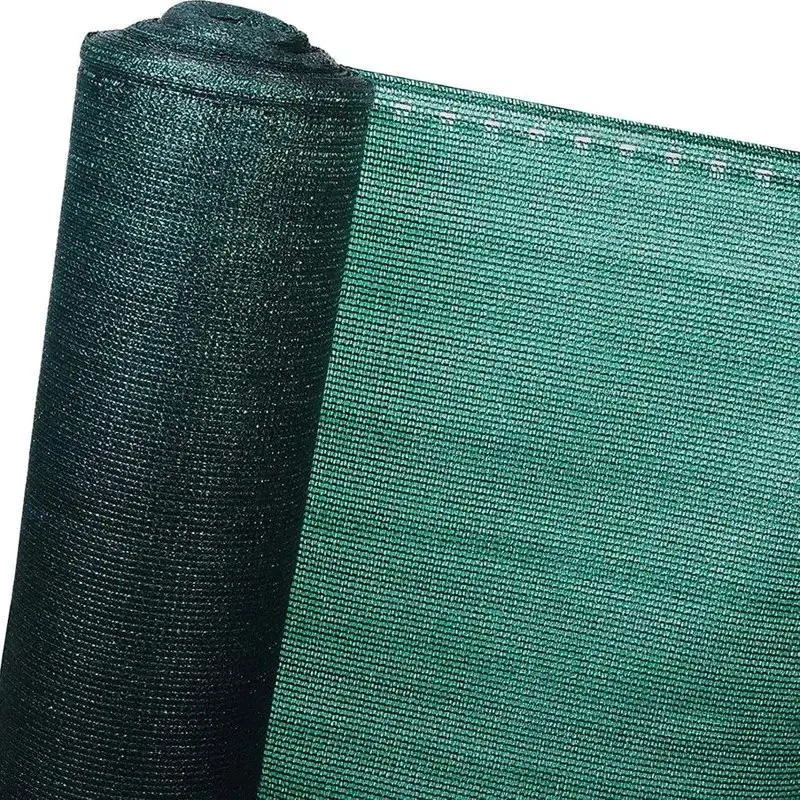
Green tape shade net roll with lock-stitch weave detail.
What information to send before inquiry
A one-line inquiry gets a one-line answer. Send these five and you will get an accurate quote with samples matched to your case:
- Application and crop or animal - or patio dimensions for outdoor use
- Installation type: flat cover, sloped roof, pergola frame
- Area and preferred roll width
- Target lifespan in seasons or years
- Color and packaging: bulk rolls, retail packs, or private label
FAQ
Is 70% shade cloth too much for tomatoes?
In most cases yes - tomatoes and cucumbers do best at 30-50%. Reserve 70% for nurseries, ornamentals and shade-loving crops.
Does higher GSM mean more shade?
No. The same percentage exists at very different weights depending on yarn type. GSM tracks strength and price, not the number on the label.
Can I order custom sizes, colors and my own label?
Yes. MOQ is 3,000 kg per color or size, widths to 8 m, and retail packaging with your own barcode is available; samples ship in 7 workdays.
Next steps
Pick the percentage by application, the color by climate, the build by lifespan - then send the five spec lines with your inquiry. Browse our agricultural shade netting and patio shade range, or send your application details to our sales team for a quote within the same week.