Buying Guides
How to Choose Olive Harvesting Nets for Your Orchard
Compare olive harvesting net sizes, 32 and 85 gsm options, central slits, eyelets and roll formats. Learn what to check before placing an order.
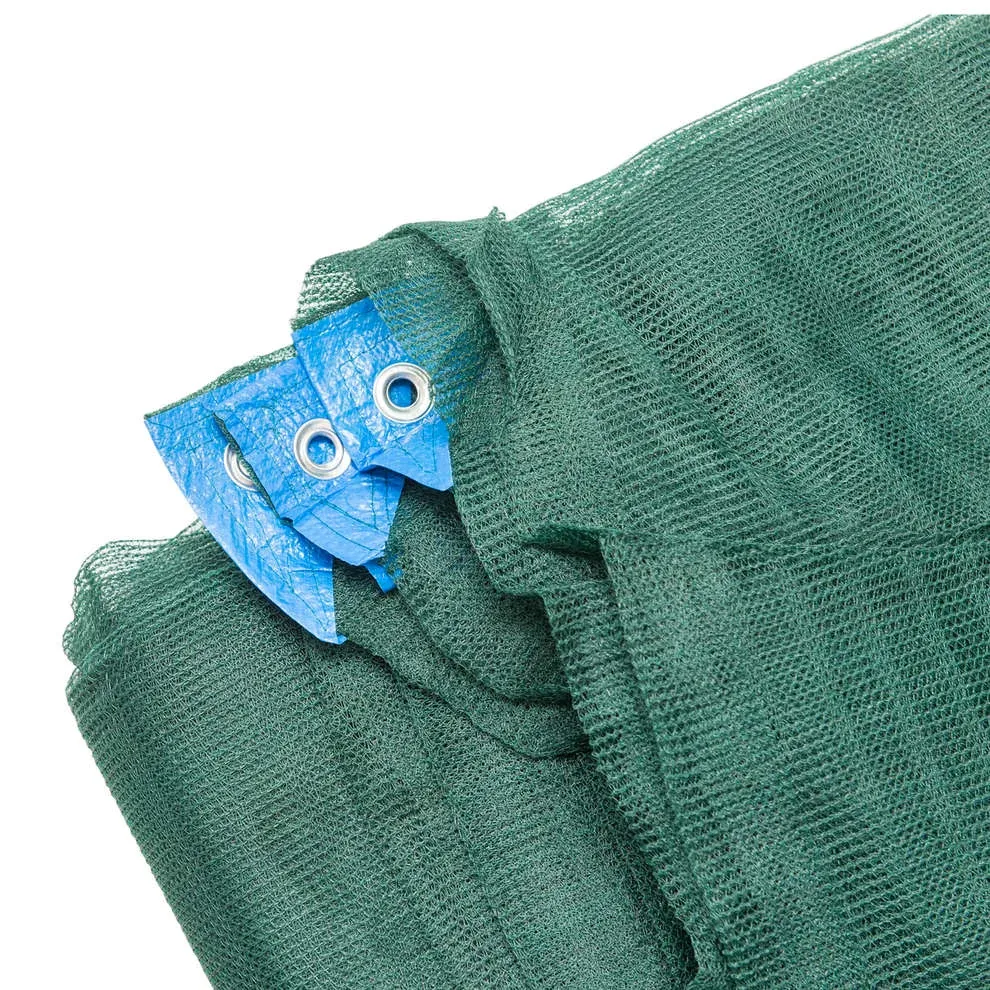
Choose olive harvesting nets by matching the fruit collection area, the layout around the trunk and the weight your team can handle. Then compare the mesh, edge finishing and packing. These decisions help you avoid coverage gaps, awkward panels and orders that differ from the sample you approved.
This guide compares HDPE olive harvesting nets in 32 and 85 g/m², including rectangular panels, square nets with a central slit and rolls. For product details, visit our olive harvesting net product page.
1. Which net format fits your orchard?
Olive harvesting nets are laid beneath olive trees to catch fruit during picking or shaking. Choose the format around the full working sequence: spreading the nets, collecting the fruit, gathering the panels, transferring the olives and moving to the next tree.
Square nets with a central slit
A central slit allows a panel to be positioned around a tree trunk. Check how the slit edges meet once the net is laid out and whether the arrangement leaves a gap in the collection area.
The listed square configurations have perimeter aluminium eyelets at 1 m spacing and blue triangular tarpaulin patches. A central slit is different from a circular trunk opening; specify the opening geometry on the order drawing.
Rectangular panels
Rectangular panels let you arrange separate pieces beneath the tree. Smaller pieces may be easier to move individually, while larger panels reduce the number of joints to manage. Compare both the weight of each piece and the number of pieces your team needs to handle.
The listed 85 g/m² rectangular configuration includes corner eyelets with reinforcing tarpaulin patches and additional aluminium eyelets at 1 m spacing along specified edges.
Rolls
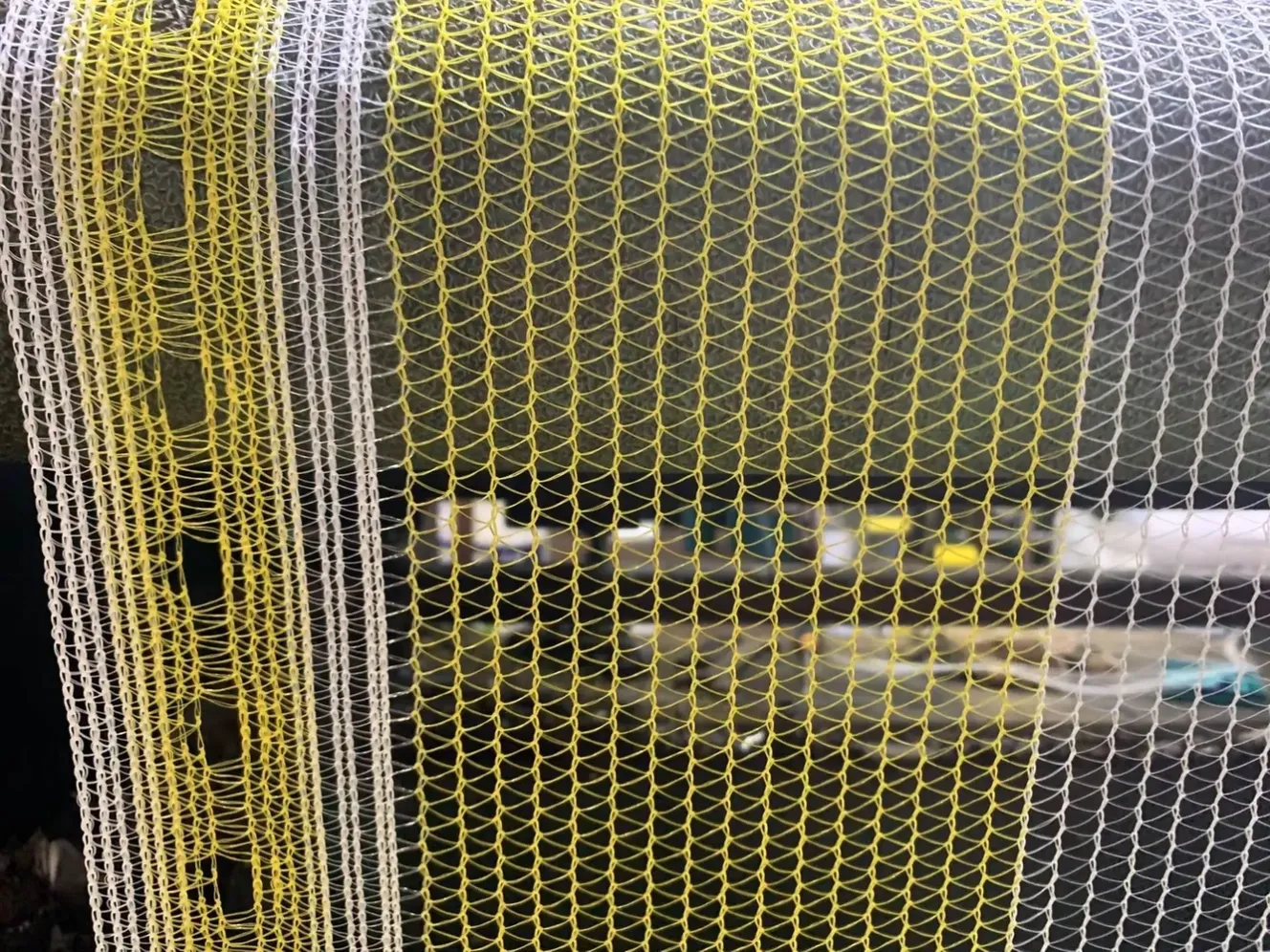
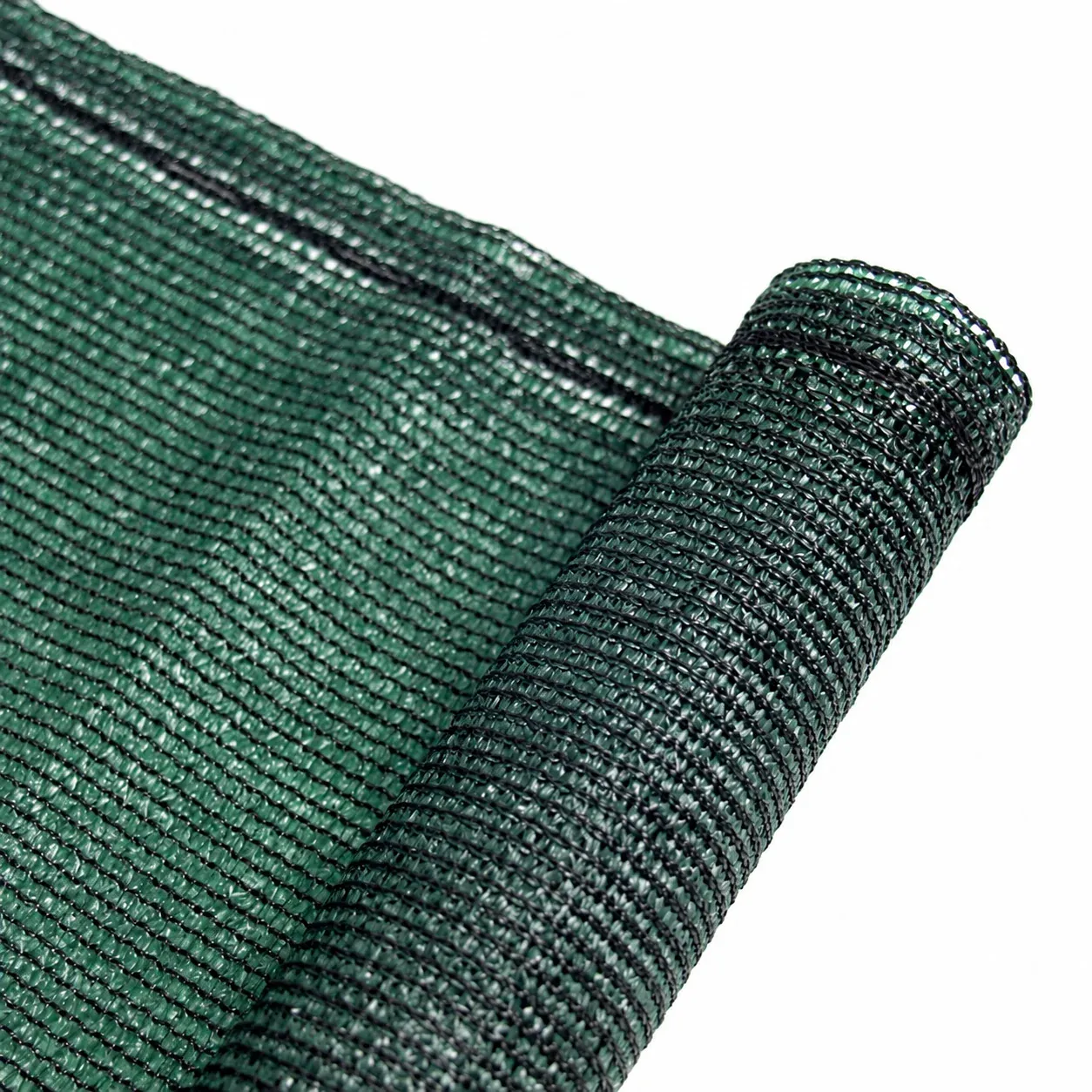
Rolls may suit buyers planning longer layouts or converting fabric into separate panels. The listed roll configurations have no eyelets, hemmed and sewn short ends, and denser long edges. Include any cutting and subsequent edge finishing in your procurement plan.
Compare representative sizes
Net format | Fabric weight | Representative dimensions (m) |
|---|---|---|
Square net with central slit | 32 or 85 g/m² | 6 × 6; 8 × 8; 10 × 10; 12 × 12 |
Rectangular panel | 85 g/m² | 4 × 6; 6 × 8; 8 × 12 |
Roll without eyelets | 32 g/m² | 4 × 100; 5 × 200; 6 × 100 |
Roll without eyelets | 85 g/m² | 4 × 50; 8 × 50; 12 × 25 |
These are representative sizes from the specification list. For other sizes, send the dimensions and format you need. The quotation should state the finished dimensions, tolerances and selected finishing combination.
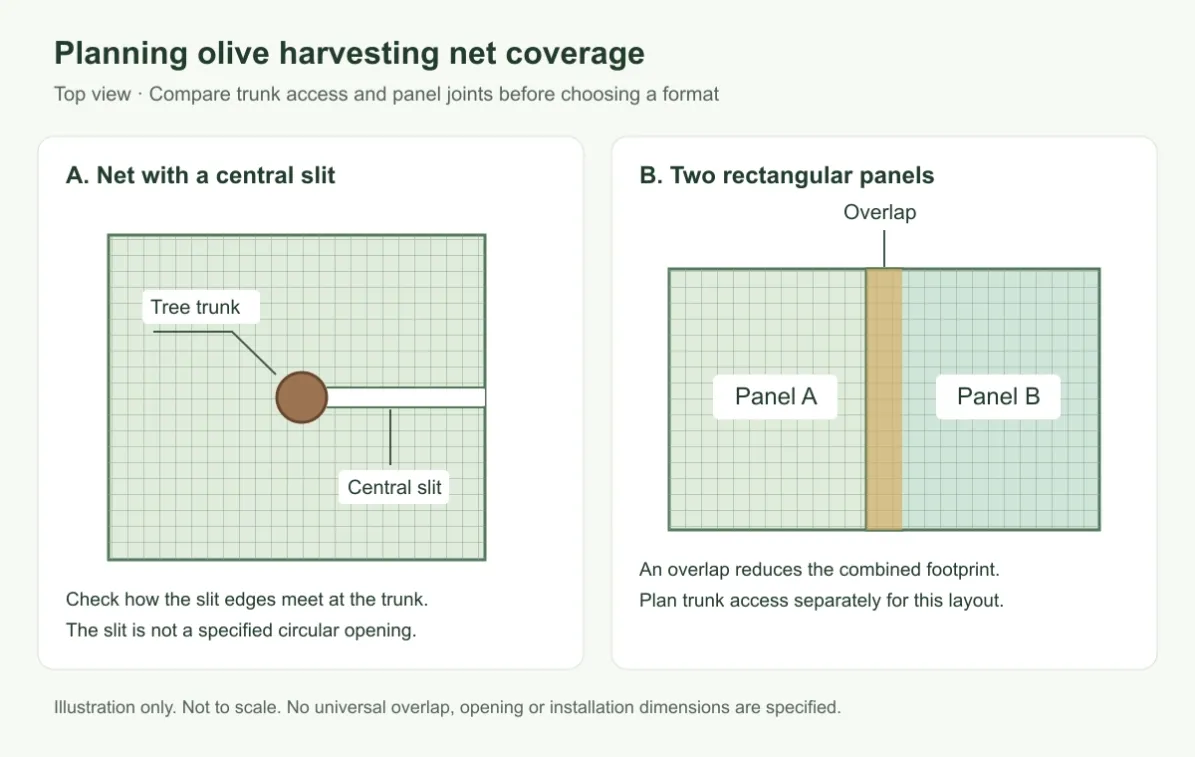
Illustrative layouts, not a field-use photograph or an installation specification. Check trunk access, panel joints and the collection area for your own trees.
2. How do GSM and panel size affect handling?
GSM means grams per square metre. For the same area, a higher GSM gives a higher nominal fabric mass. Use that calculation to shortlist manageable sizes, then evaluate a finished sample with your team.
Compare 32 and 85 g/m² on the same area
Theoretical fabric mass (kg) = length (m) × width (m) × GSM ÷ 1,000
Nominal panel size | At 32 g/m² | At 85 g/m² |
|---|---|---|
6 × 6 m | 1.15 kg | 3.06 kg |
8 × 8 m | 2.05 kg | 5.44 kg |
Values are rounded nominal fabric masses. Eyelets, patches, hems, stitching, openings and production tolerances affect the finished net weight. Packaging adds to shipping weight.
For an 8 × 8 m fabric area, the difference between 32 and 85 g/m² is approximately 3.39 kg before finishing. A larger panel may reduce the number of separate pieces, but its handling effort still needs to suit your crew.
Allow for overlaps and gaps
Nominal fabric area and collection coverage are different. Sketch the trunk position and the joints between panels before deciding how many nets are needed.
For example, two 4 × 6 m panels placed side by side, with their 6 m sides parallel and an assumed 0.5 m overlap, produce this rectangular footprint:
6 × (4 + 4 − 0.5) = 45 m²
That is less than their combined 48 m² of fabric. The 0.5 m overlap is a planning example; choose the actual arrangement around your harvesting method and tree layout.
3. What should you check on a sample?
A useful sample check follows the way the net will be used. Lay it out, check the opening and joints, and assess spreading and gathering before judging it from a folded photograph.
Mesh and fruit retention
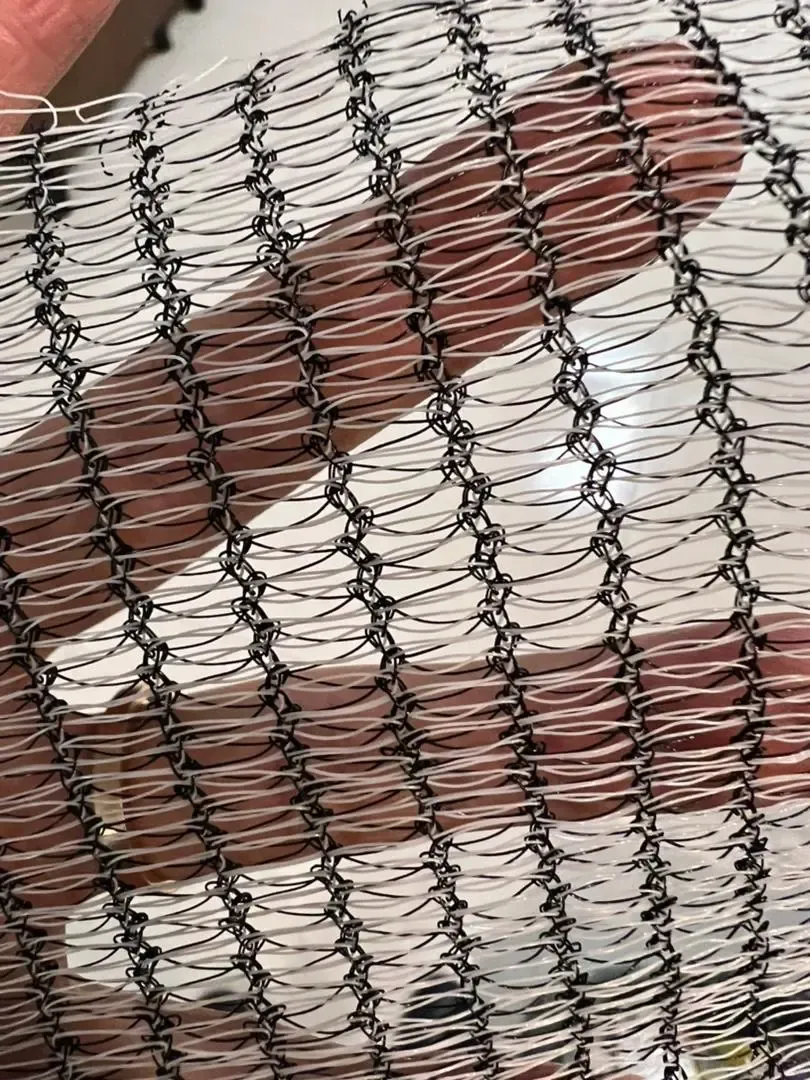
Use olives representative of the fruit sizes you expect to collect. Observe whether they stay on the net during placement, gentle gathering and transfer. For small fruit, include a mesh-opening requirement in the enquiry.
Check handling against relevant orchard conditions, such as exposed stones or pruning debris. Avoid treating GSM alone as proof of resistance to snagging or tearing.
Edges, patches and eyelets
Inspect the stitching, eyelet attachment and patch positions against the approved drawing. The product photo below shows the construction details a buyer can identify visually.
Close-up of blue corner patches and metal eyelets. Include the required eyelet layout and corner treatment in the order specification.
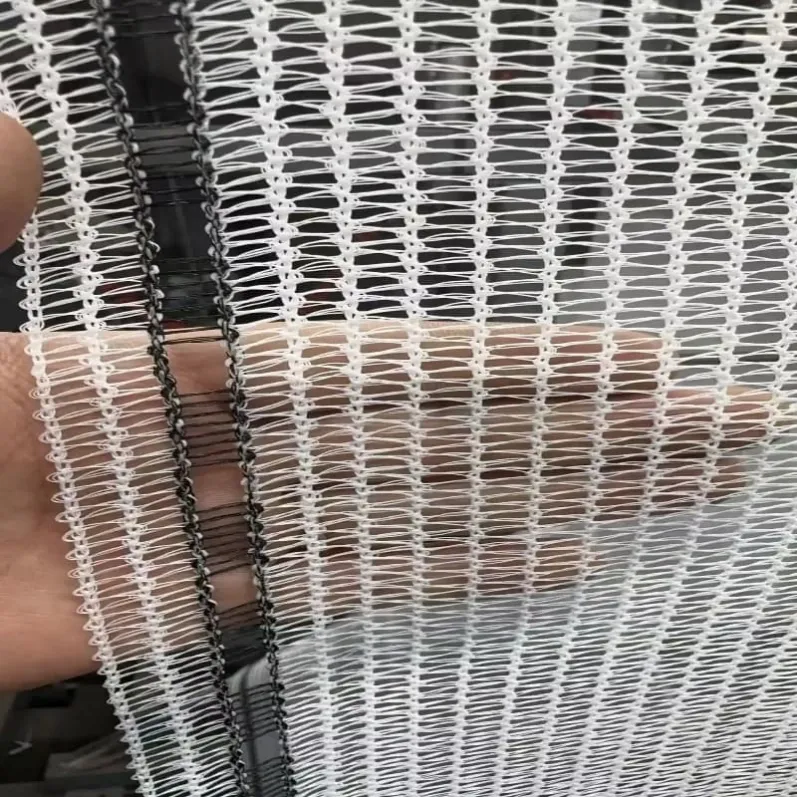
For rolls, check both the long edges and the short ends. Cutting a roll creates new edges, so any required finishing after cutting should be agreed separately. Eyelets should not be treated as lifting points for a loaded net without an applicable load specification.
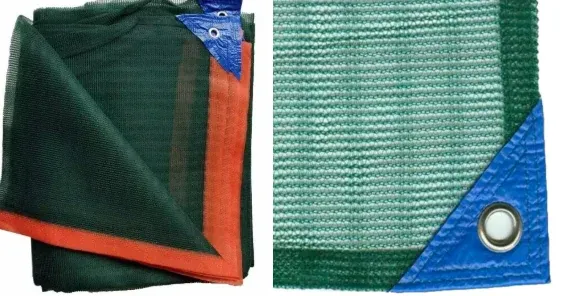
A product example with an orange edge band. Use the selected sample to identify the finish required for the order.
UV treatment
The listed 32 and 85 g/m² configurations specify UV treatment. If outdoor durability is important to the purchase, request the applicable UV specification and supporting information. Any service-life commitment needs its own stated conditions; UV treatment alone does not define a number of years.
4. How do you specify a consistent wholesale order?
Put the selected configuration into one purchase checklist. This helps importers and distributors compare quotations on the same basis and identify different models when goods arrive.
Order item | What to record |
|---|---|
Format and quantity | Rectangular panel, square net with central slit, or roll; quantity for each configuration |
Dimensions | Finished length and width in metres, dimensional tolerance and opening layout |
Fabric | HDPE, selected GSM and mesh requirement; the listed 32/85 gsm tolerance is ±2 g/m² |
Finishing | Edge construction, patch positions, eyelet material and diameter, spacing and edge locations |
UV requirement | Applicable specification and any agreed evidence or exposure conditions |
Packing | Individual pack, outer pack quantity, label text and model identification |
Approval reference | Approved sample, specification sheet, drawing and agreed inspection method |
The listed panel packing is one net per plastic bag with a label sheet, with multiple nets in a woven sack. Roll packing is one roll per plastic bag with a label sheet. State the required outer-pack quantity and label details on the order.
For repeat purchases, retain the approved sample and specification. Clear references make it easier to identify a change in dimensions, finishing or packing between deliveries.
Does a higher GSM automatically mean a better net?
No. It increases nominal fabric mass for the same area. The appropriate choice also depends on mesh construction, finishing, coverage and handling. Compare a finished sample against the work it needs to do.
How many nets should I order?
Count the panels needed by each team working at the same time, then allow for your spare and replacement requirements. The total number of trees does not determine the number of reusable nets by itself.
Can I compare prices per kilogram and per square metre?
Yes, when the weight basis is clear. For fabric-only pricing, the theoretical price per m² equals the price per kg multiplied by GSM and divided by 1,000. Finished-net quotations may include eyelets, patches, sewing and packing. Compare the same finished specification and price basis.
What should I send to request a quotation?
Send the net format, dimensions, GSM and quantity, plus a photo or sketch of the proposed collection layout. Include any problem with your current nets, such as gaps, difficult handling, inconsistent finishing or unclear packing.
Contact Kunjie Net for an olive harvesting net quotation. Include your required size, fabric weight, quantity and packing details so we can
address your purchasing requirements.
New to olive harvest nets? Start with our beginner's guide: How to Choose Olive Harvest Net for Olive Groves: GSM, Size and Corners Compared.